

 česky
 slovensky
 Deutsch
 español
 italiano



Anaphylaxis: What to Do in the First Minutes?
If someone bites into food containing nuts and their face suddenly starts swelling, their skin turns red, and breathing becomes labored, this isn't an ordinary allergic reaction. It may be anaphylaxis, and the situation is decided within minutes.
If you suspect anaphylaxis, call 155 immediately. If the person has an adrenaline auto-injector available, administer it into the outer thigh, and position them appropriately depending on whether they're having trouble breathing or with circulation. These first few minutes often determine how the reaction turns out.
When someone experiencing a severe allergic reaction can't speak, a BodyID identification bracelet can alert those around them to their allergy. The engraved tag can include the specific allergen and a contact for a close person.
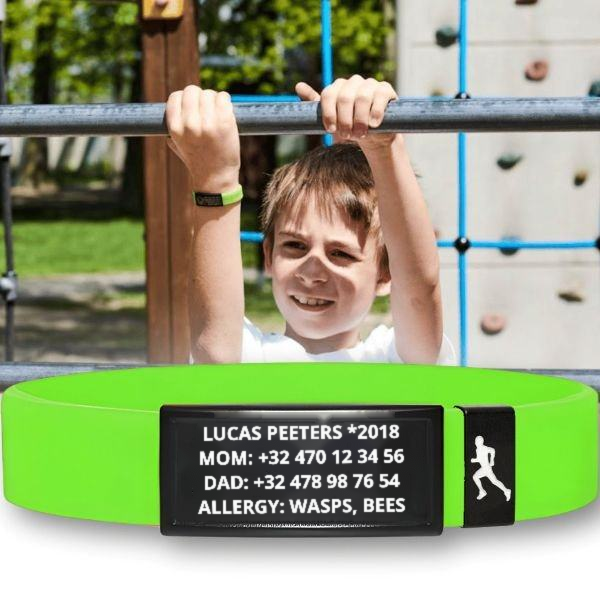
How to alert others to an allergy when you can't speak
You can have your name, specific allergy, and a close contact's phone number engraved on a BodyID identification bracelet. This lets those around you read important information even when you can't communicate it yourself. The text on the tag is readable without a phone, internet, or battery.
For children, the bracelet can alert a teacher, activity leader, or another adult helping them to the allergy. A phone number directly on the tag also makes it possible to contact the parents at school, on a trip, or during sports.
What is anaphylaxis, and why do minutes matter?
Anaphylaxis is the most severe form of allergic reaction. It's a rapidly developing immune system response that can affect breathing, circulation, and consciousness within minutes. It's most often triggered by foods such as nuts, milk, or eggs, as well as insect stings, medications, or natural latex.
Unlike a typical allergic reaction, which usually shows up only on the skin or as a runny nose, anaphylaxis affects the entire body at once. That's why it's called a systemic reaction, and why acting quickly is so important. You can learn more about how allergies work in general in our article on allergies, and we cover anaphylactic shock in more detail in a separate article.
How do you recognize anaphylaxis?
- Skin: hives, redness, swelling of the lips, tongue, or eyelids.
- Breathing: wheezing, a feeling of a tightening throat, hoarseness, shortness of breath.
- Circulation: paleness, rapid or weak pulse, dizziness, drop in blood pressure, fainting.
- Digestive system: nausea, vomiting, abdominal cramps, diarrhea.
- Overall state: anxiety, restlessness, a sense of impending danger.
What to do in the first minutes if you suspect anaphylaxis
- Call 155, or ask someone else to do it. Describe the symptoms and say that you suspect anaphylaxis.
- If the person has an adrenaline auto-injector available, administer it immediately. It's injected into the outer thigh, even through clothing if needed.
- Position the person appropriately. If they're having trouble breathing, have them sit with their torso slightly leaning forward; if they feel weak or dizzy, lay them on their back with legs raised; if they're unconscious, place them in the recovery position on their side.
- Monitor their breathing and consciousness. If the person stops breathing, begin resuscitation following general first aid principles.
- Seek medical help even after their condition improves. Symptoms can return later, so further monitoring should always be done under a doctor's supervision.
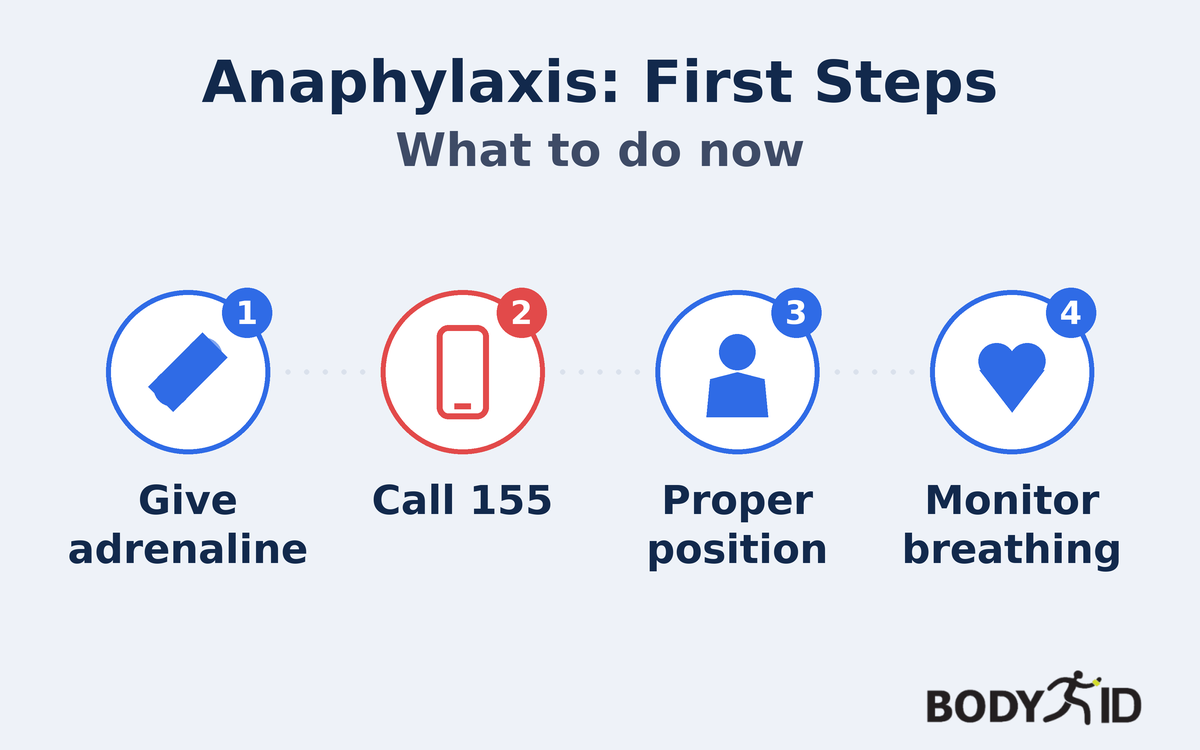
Overview of first steps in anaphylaxis
Adrenaline, calling 155, proper positioning, and monitoring breathing: remembering first aid in this order makes it easiest.
What's different about anaphylaxis in children?
In children, anaphylaxis often develops faster, and the symptoms are harder to recognize because young children may not be able to describe feeling unwell or that their tongue feels numb. Instead, watch for behavioral changes, such as sudden crying, restlessness, facial swelling, hoarseness, or refusing to swallow.
First aid follows the same steps as for adults: adrenaline if the child has it prescribed and on hand, positioning based on symptoms, and calling 155. Be careful when raising the legs or sitting the child up, and follow whatever actually makes breathing easier for them.
How does a regular allergy differ from anaphylaxis?
A typical allergic reaction is usually limited to one system, most often the skin, where it causes itching or hives, or the respiratory tract, where it causes sneezing or a runny nose. It's unpleasant but usually manageable without immediate intervention.
Anaphylaxis, on the other hand, is a systemic reaction that affects multiple body systems at once and can quickly threaten breathing or circulation. A combination of symptoms, such as hives together with shortness of breath, is a sign that this isn't a regular allergy but a condition requiring immediate help.
What do first aid recommendations rely on?
First aid procedures for anaphylaxis are based on international guidelines for resuscitation and allergology, which are regularly updated as new findings emerge. The basic principles (prompt administration of adrenaline, calling for help, and monitoring breathing and circulation) have remained consistent over the long term.
For laypeople, it's enough to know and follow the steps described above. Detailed clinical protocols are intended primarily for medical professionals and doctors.
How can a BodyID bracelet help in a severe reaction?
When someone having a severe reaction can't speak, those around them may not know what they're allergic to, what medications they take, or whom to contact. A BodyID bracelet can help convey this important information.
The classic BodyID identification bracelet carries your own engraved text, for example your name, a note about a specific allergy, and a contact number for a loved one. The information is readable directly on the tag, without a phone, internet, or battery.
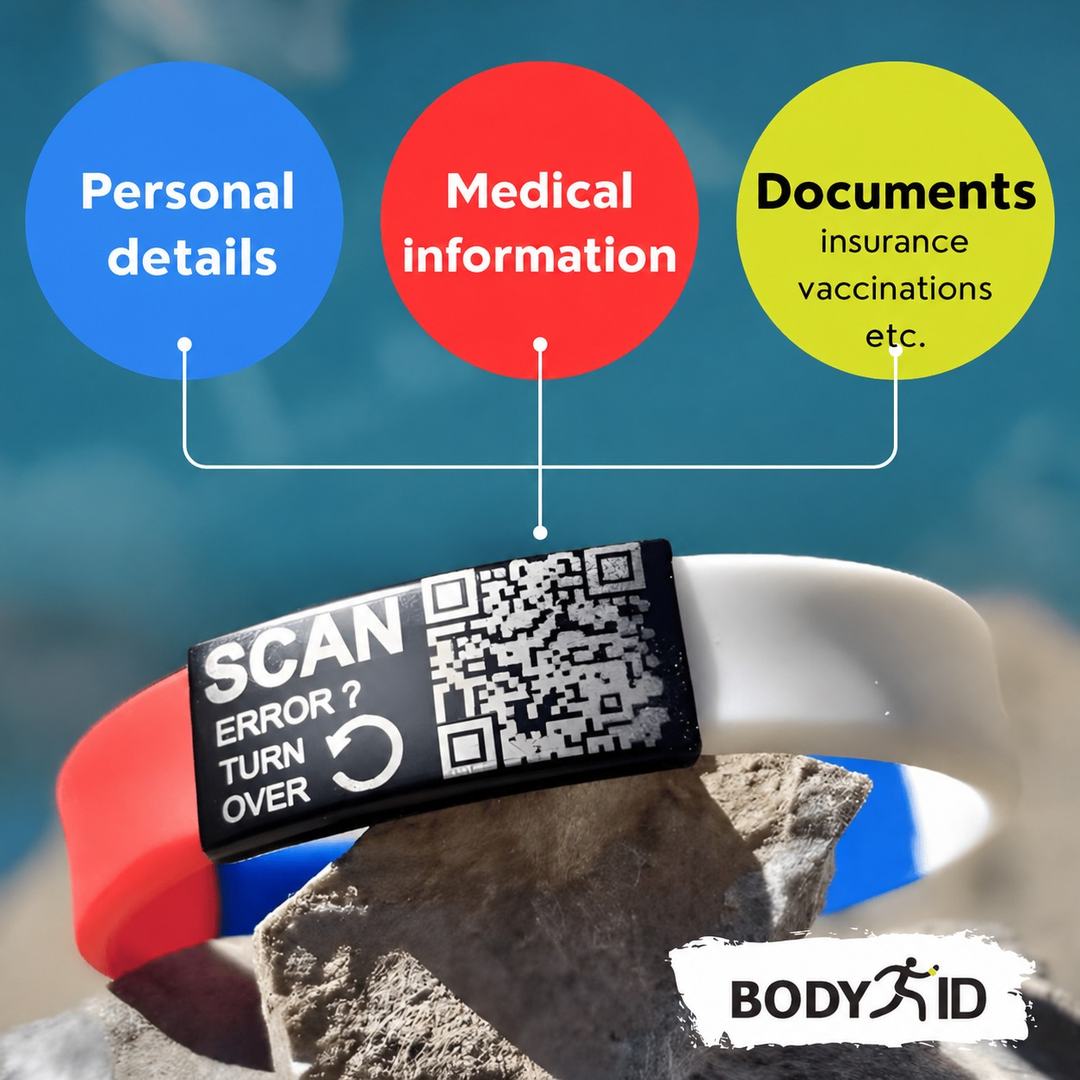
The BodyID bracelet with a QR code links to your personal online health record at zdravotniprofil.cz. There you can add details about allergies, medications, your health condition, and contacts for loved ones. Anyone nearby or a medical professional can access it by scanning the QR code with an ordinary smartphone with internet access. No special app is required. You can keep the information updated at any time without replacing the bracelet.
The bracelet is a supplementary tool for conveying information. It does not replace an adrenaline auto-injector, calling 155, or providing first aid.
Summary
Anaphylaxis is a severe, whole-body allergic reaction where minutes count. If you suspect it, call 155; if an adrenaline auto-injector is available, administer it; position the person appropriately based on their symptoms; and monitor their breathing and consciousness until help arrives. Even after apparent improvement, the person should see a doctor, since symptoms can return. An identification bracelet can then quickly show paramedics and bystanders what to watch for and whom to contact.
Anaphylaxis and first aid
Anaphylaxis is the most severe form of allergic reaction. It affects multiple body systems at once, such as the skin, breathing and circulation, and can develop within minutes.
On a classic BodyID identification bracelet, include the specific allergen, your name, and an emergency contact. If you carry an adrenaline auto-injector, you can note that too. Your text will be engraved directly on the tag.
If you need to include more information, choose a BodyID bracelet with a QR code. It links to your online health profile, where you can enter details about allergies, medications, and contacts for loved ones. You can keep the profile updated at any time.
A typical pattern is a combination of symptoms: hives or skin swelling, breathing difficulties, a drop in blood pressure or dizziness, and possibly nausea and vomiting. The more systems affected at once, the more likely it is anaphylaxis.
In children, it often develops quickly and shows up mainly as changes in behavior, such as restlessness, crying, or refusing to swallow. First aid follows the same steps as for adults, just with more careful handling when positioning the child.
A regular allergy usually shows up in just one place, such as itchy skin or a runny nose. Anaphylaxis affects multiple systems at once and can quickly threaten breathing or circulation, which is why it requires immediate help.
Even without an auto-injector, the same procedure applies: call 155 immediately, position the person appropriately based on their symptoms, and monitor their breathing and consciousness until emergency services arrive.
Yes. Even after improvement, symptoms can return later (a so-called biphasic reaction), so further monitoring should always be done under a doctor's supervision.